

Call for Papers
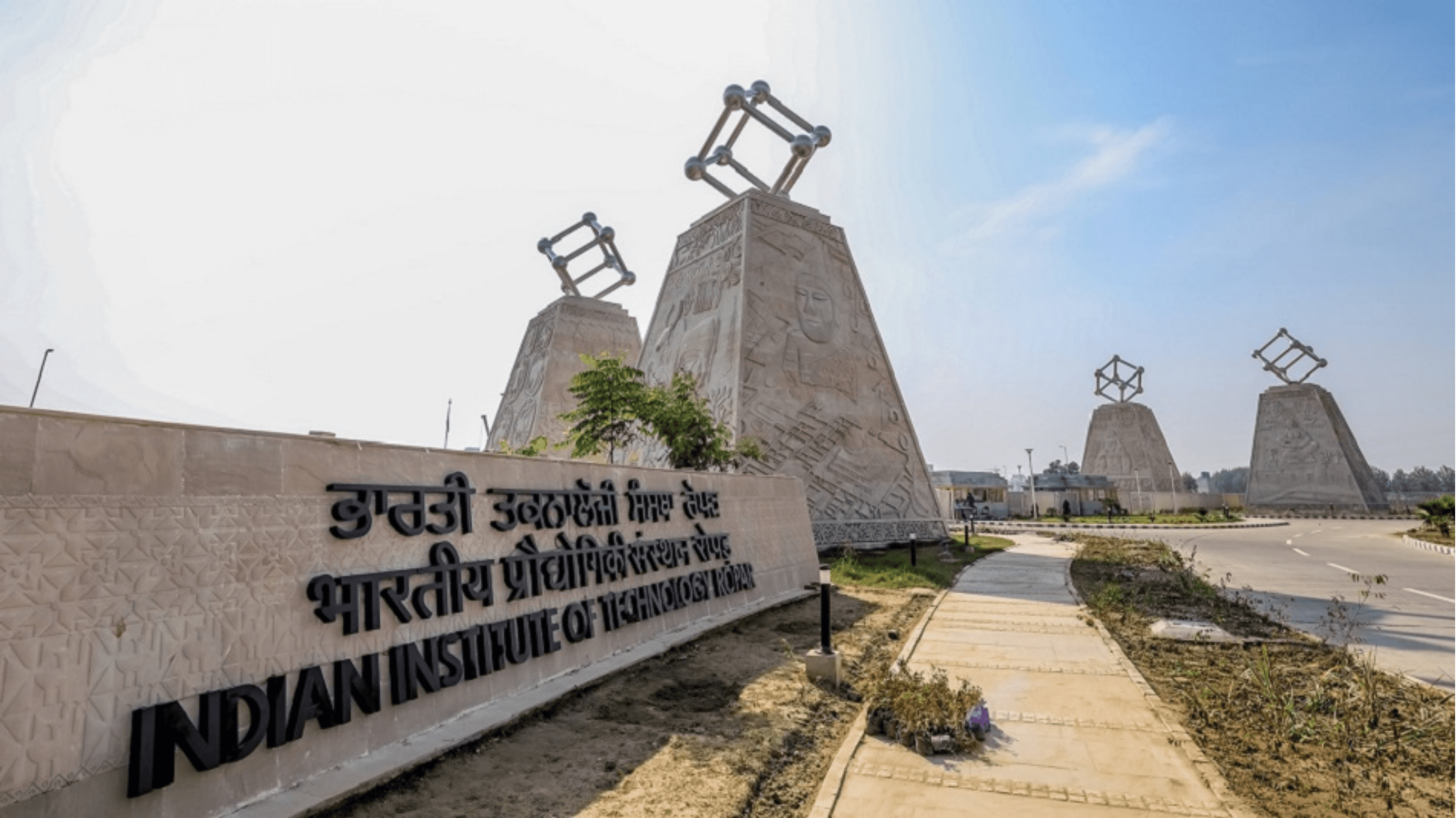
We invite researchers, academicians, industry professionals, and practitioners to submit original, high-quality research contributions in the field of Agriculture-Centric Computation. ICA 2026 is jointly hosted by ANNAM.AI and IIT Ropar, with accepted papers to be published in Springer CCIS.
Submit Your Paper via Microsoft CMT3
Full Paper Submission: 15th August 2026 23:59:59 IST.
No further extensions will be granted.
Important Dates
Please note the following milestones for ICA 2026.
Full Paper
15th
August 2026
23:59:59 IST
Firm DeadlineAcceptance
8th
September 2026
11th September 2026
Camera Ready
25th
September 2026
Conference
1st – 4th
November 2026
Paper accepted?
Review the camera-ready formatting and submission requirements.
The inaugural ICA was held at IIT Ropar in May 2023, with selected papers published in Springer CCIS. Since then, ICA has established itself as a premier platform for researchers, practitioners, and policymakers exploring the transformative role of computation and system architectures in agriculture.
We invite authors to submit original research papers, tutorials, and demos on agriculture-centric computation, architectures, and knowledge systems. Topics include, but are not limited to:
Topics of Interest
Research tracks are organized into three strategic tracks reflecting the scope of agriculture-centric computation.
Track 1
Activity-level Computational Innovations
Farm-level tasks and automation
- Algorithms and architectures for IoT-based sensing, control, and actuation
- Real-time computation for drone/robot navigation, path-planning, and spraying operations
- Computer vision and deep learning pipelines for plant stress detection and phenotyping
- Edge-computing frameworks for localized analytics and micro-advisory services
- Secure, lightweight computation for farmer-controlled data sharing
- Knowledge-driven advisory systems powered by ontologies for task-specific decision support
Track 2
Process-level Computational Innovations
Enhancing cultivation and supply chains
- AI/ML models for crop yield prediction, disease diagnostics, and risk assessment
- Predictive analytics and optimization algorithms for irrigation, soil health, and nutrient management
- Cloud/edge hybrid architectures for scalable agriculture platforms
- Computational modeling and simulation of crop growth, livestock, and aquaculture processes
- Blockchain protocols and smart contracts for trusted logistics, payments, and cooperative operations
- Agriculture ontologies and semantic knowledge bases for interoperability across platforms and datasets
- Knowledge graphs for integrating heterogeneous agricultural information sources
Track 3
Ecosystem-level Computational Innovations
Large-scale systems, resilience, and governance
- Computational models for price prediction, demand forecasting, and digital marketplace optimization
- Algorithms and architectures for supply–demand balancing, logistics, and resilience planning
- Climate-smart agriculture simulations and system architectures for large-scale food security analysis
- Crisis-response computation for resilient agricultural ecosystems under disruptions
- Policy informatics and decision-support architectures for governments, cooperatives, and NGOs
- Agri-FinTech computations for secure micro-credit, insurance, and digital transactions
- Social computing algorithms for trust-building, reputation modeling, and collaborative decision-making
- Privacy-preserving computation, federated learning, and data governance architectures
- Ontology-driven knowledge bases and reasoning engines for agricultural ecosystems
Workshops / Tutorials / Demos
Proposals for tutorials, workshops, and demos are being invited on relevant themes. Tutorials and workshops can be half-day in length. The proposal should be submitted as an extended abstract (max up to 1000 words).
The submission should include the following:
- A thematic synopsis of the content to be covered.
- A description of the proposer.
- Their pertinent credentials.
Author Instructions
All regular papers should be 12–15 pages in length based on Springer LNCS format. For LaTeX and Word templates and further formatting information, please visit the Springer website:
open_in_newSpringer LNCS Conference Proceedings GuidelinesSubmission Guidelines
Originality & Format
Submissions must be original, unpublished work. Papers should follow the Springer CCIS template (approx. 12-15 pages for full papers).
Blind Review
ICA 2026 employs a double-blind review process. Ensure your manuscript is anonymized before uploading.
Publication
All accepted papers will be published in Springer Communications in Computer and Information Science (CCIS).
Ready to contribute?
Submit Your Paper Here.
Paper Submission
CMT3 Portal
Submit your paper through the official Microsoft CMT3 Conference Management System.
open_in_newSubmit Your PaperInternational Authors
ICA 2026 welcomes participation from researchers across the globe. International authors who are unable to attend the conference in person due to visa delays or other unavoidable circumstances may request permission to present their accepted papers online. Such requests will be reviewed by the Conference Organising Committee on a case-by-case basis. All other conference policies, including registration and publication requirements, will remain applicable.
Please note: Online presentation is intended only for exceptional circumstances and requires prior approval from the Conference Organising Committee.
Need Assistance?
Questions about paper submission, registration, presentation mode, or participation? Contact the ICA 2026 Organising Committee.
Springer CCIS Series
All accepted papers will be published in Springer Communications in Computer and Information Science (CCIS).

Full Paper Submission
15th August 202623:59:59 IST
Acceptance Notification
8th September 202611th September 2026
Camera-Ready Submission
25th September 2026
Conference
1st – 4th November 2026
Acknowledgment
The Microsoft CMT Acknowledgment
The Microsoft CMT service was used for managing the peer-reviewing process for this conference. This service was provided for free by Microsoft and they bore all expenses, including costs for Azure cloud services as well as for software development and support.
We warmly invite researchers, architects, practitioners, and policymakers to contribute and participate in ICA 2026. Please share this announcement with colleagues and collaborators working at the intersection of computing, agriculture, and sustainability.
— Organizing Committee, ICA 2026